
Get Personal Loans up to 5 Lakhs in 10 minutes
Home > Personal Loan > Emergency Loan
An emergency loan is a personal loan people take when an expense cannot wait, most often a medical bill. It can also cover an urgent home or vehicle repair, a sudden travel need, or a shortfall before your salary arrives.
Speed matters in an emergency, but a decision made in a rush is how people end up with a bigger, costlier loan than they need. So, it is important to withdraw the loan amount that takes care of the urgent expense rather than the entire loan amount you are sanctioned for.
This page explains what an emergency loan really is, the time it takes to complete the entire process, what it costs, and who can apply. It also covers the options worth checking before you borrow.
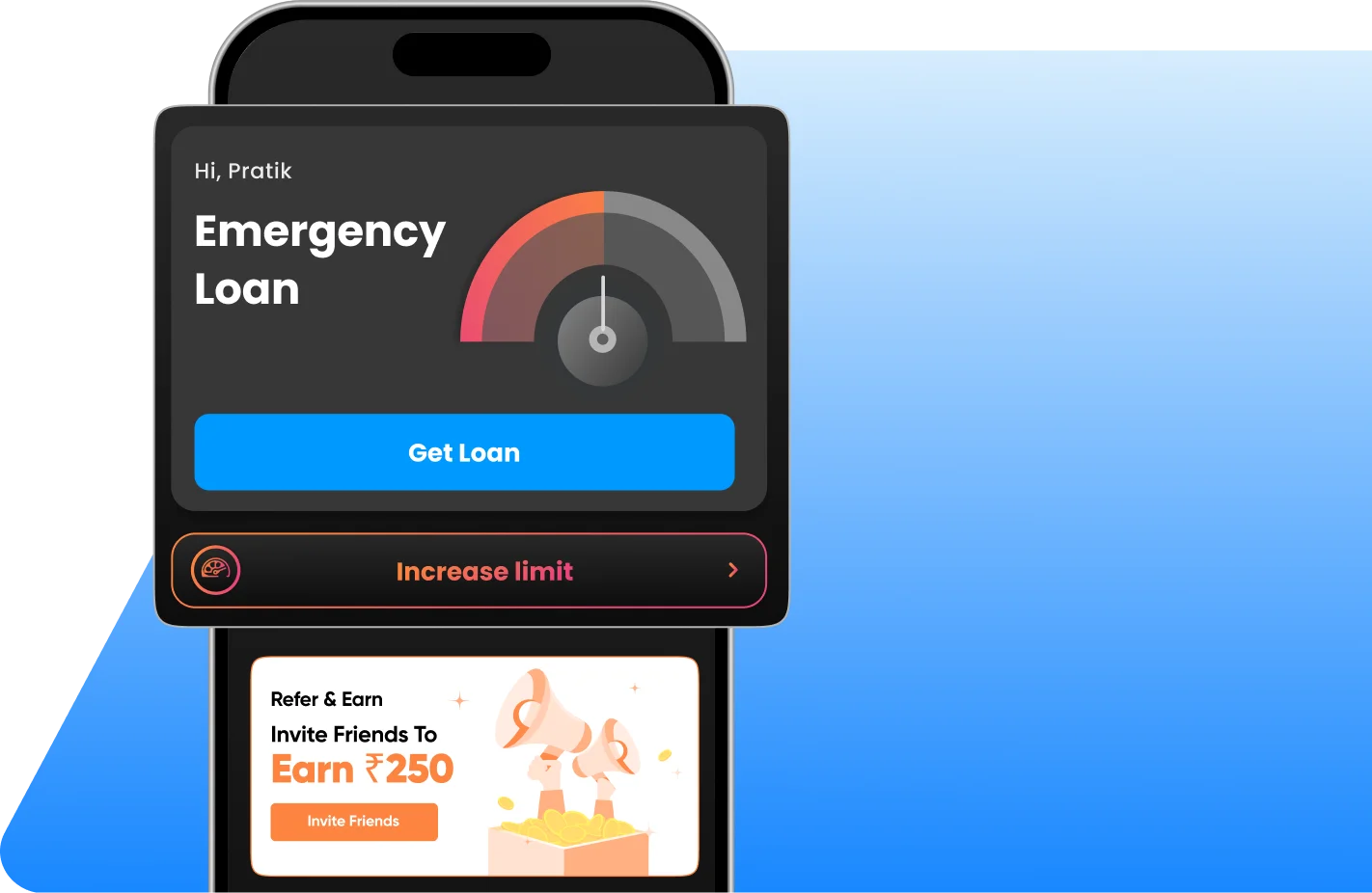
On Zype, an emergency loan is a personal loan that can be utilized for urgent expenses. Eligible individuals can apply for ₹3,000 to ₹5 lakh, disbursed via RBI-registered NBFCs.
A medical emergency is one of the most common reasons people search for urgent loans. Hospital admissions, surgery, and treatment can bring large bills at a short notice, and not everyone has enough insurance or savings to cover the entire cost of the treatment. In practice, a medical emergency loan is just a personal loan used for treatment at short notice. It is sometimes called a health loan or a hospital loan, but the product is the same unsecured personal loan.
An unsecured personal loan can help manage urgent medical expenses. The money can cover everything from the hospital deposit to medicines and follow-up care. If you need it quickly, choose a bank or an RBI-registered NBFC, and check the interest rate, fees, and repayment terms before you withdraw the loan amount.
Before you borrow for the treatment, check two things. First, find out what your health insurance and the hospital's cashless facility will cover, because the loan should help fill the gap instead of being used to cover the entire expense. Second, borrow only what you really need. An emergency can push you to borrow more than necessary, but every extra rupee you borrow carries interest across the entire repayment tenure.
Speed is the main appeal of an emergency loan, and a digital loan often the quickest option. Here, "fast" refers to the online process. The entire application process usually take around a few minutes to complete. The actual time the money takes to reach your bank account is subject to the lender’s application process and eligibility criteria.
On Zype, eligible applicants can finish the application in about 10 minutes, subject to verification. Once your KYC verification is complete and you have signed the loan agreement, the money is credited directly to your bank account.
To ensure the application process is smooth, while applying, enter your details accurately, keep your PAN and Aadhaar ready, and apply from the bank account your salary is credited to.
An emergency loan costs the same as any personal loan, because it is one. On Zype, the interest rate ranges from 18% to 34% per annum on a reducing balance. The RBI-registered NBFC sets your interest rate based on your credit profile. There is also a one-time processing fee, between 2% and 6% of the loan amount, deducted before the money is credited to your bank account. Reducing balance means interest applies only to what you still owe, so the interest part of each EMI falls as you repay.
The table below takes a ₹50,000 loan at a representative interest rate of 24% per annum and shows how the tenure changes what your total cost.
| Tenure | Monthly EMI | EMI on a ₹30,000 salary | Total interest | Total cost (incl. 4% fee) |
|---|---|---|---|---|
| 6 months | ₹8,926 | 30% | ₹3,558 | ₹5,558 |
| 12 months | ₹4,728 | 16% | ₹6,736 | ₹8,736 |
| 18 months | ₹3,335 | 11% | ₹10,032 | ₹12,032 |
| 24 months | ₹2,644 | 9% | ₹13,445 | ₹15,445 |
Illustration for a ₹50,000 loan at an interest rate of 24% p.a. on a reducing balance, including a 4% processing fee. Your actual rate, EMI, and fee depend on your profile and appear in your Key Fact Statement before you accept.
To see the total cost at the amount you need, these amount guides work through each one in detail: the ₹10,000, ₹30,000, ₹50,000, and ₹1 lakh personal loan pages, or the small personal loan guide for smaller needs.
An emergency can create pressure to borrow quickly. But before you apply, it is worth checking other options that could cover the expense.
If you still need funds, a personal loan from a regulated lender is a good option to consider.
Eligibility for an emergency loan on Zype is the same as for any personal loan. You should be a salaried person aged 18 to 58, an Indian resident, earning at least ₹15,000 a month credited to a bank account, with a valid PAN and Aadhaar. No salary slip is needed, and no collateral is required at any stage.
A few common searches around emergency loans are worth clarifying:
Register on the Zype app using your PAN and basic personal details.
Check your loan offer to find out the loan amount and rate of interest rate available for your profile.
Finish KYC using an Aadhaar OTP and a live selfie. No branch visit is required.
Choose your amount and tenure. Borrow only what the emergency requires and select an EMI you can comfortably repay.
Review the Key Facts Statement and initiate loan transfer. Check the KFS for the Interest rate, EMI, Repayment tenure and the total loan amount before you sign the loan agreement.
Eligibility depends on the lender. But most look for an adult resident with an income they can verify and a reasonable credit record. Some lenders serve only salaried borrowers, while others include the self-employed as well. Each lender has a minimum income requirement. On Zype, an emergency loan is open to salaried Indian residents aged 18 to 58. You need to earn at least ₹15,000 a month, credited to a bank account, and hold a valid PAN and Aadhaar. No collateral or salary slip is required.
With a digital lender, the application process usually takes a few minutes to complete. On Zype, eligible applicants can complete the application in about 10 minutes. Once you sign the loan agreement and verification is completed, the amount withdrawn is usually credited to your bank account within minutes to a few hours.
Generally, no. A loan with no income at all is very hard to get from any regulated lender, because your ability to repay is one of the main factors assessed, and a lender that skips that check entirely is usually an informal or unsafe lender. Zype however, lends only to salaried customer.
How much you can borrow depends on your income and credit profile. On Zype, an emergency personal loan runs from ₹3,000 to ₹5 lakh, and the amount you are approved for is calculated based on your credit profile, because the EMI has to fit your monthly budget. It is wiser to borrow only for the expense gap that remains not the entire loan amount that you are approved for.
It is, when you need funds quickly for a medical bill and can repay them comfortably over the following months. Because a personal loan is unsecured and quick, it works well for an urgent cost you cannot delay. It is best used to fill the gap that insurance and savings do not cover, instead of the entire expense. That way the repayment stays manageable once the emergency has passed.
Not in a literal sense. "Without documents" usually means without physical paperwork, not without any documents at all. A regulated lender still has to confirm your identity and your income, so the checks are done digitally. On Zype, this is handled by verifying your PAN and Aadhaar online, with no salary slip to submit. Be wary of any lender that claims to lend with no checks at all, as that is a sign of an informal or unsafe lender.
Government support for serious illness usually comes through health schemes and hospital assistance, not a general-purpose loan. It is separate from any private personal loan. If a scheme might apply to your situation, it is worth checking the relevant government health portal or the hospital's help desk directly. A personal loan can then cover any expense gap.
It depends on the lender. Many charge a foreclosure or prepayment fee to repay ahead of schedule, and some set a lock-in period before you can. So, it is worth checking those terms before you borrow. On Zype there is no foreclosure charge and no lock-in period, so once the emergency has passed you can clear the balance early. That saves the interest you would have paid over the remaining months.
The interest rate charged on Zype for personal loan ranges from 18% to 34% per year and charged on a reducing balance basis. The rate of interest applicable for your loan is based on your credit profile and decided by the RBI registered NBFC disbursing the loan. A processing fee of 2%-6% on the loan amount is applicable, excluding GST. The processing fee applicable is also dependent on your profile. Zype does not charge any fees foreclosure or prepayment of loan. All applicable charges, along with your EMI and total repayment, is disclosed in the Key Fact Statement, which can be reviewed before the loan is disbursed.
Loans are disbursed via RBI-registered NBFCs. Zype is operated by Easy Platform Services Private Limited.

