Table of Contents
ToggleIntroduction
When you get a bonus, incentive, or even some savings, closing your loan early feels like a smart move. Many people also assume it will instantly boost their credit score. But credit scores don’t work like that. They look at your overall credit behavior over time. This blog explains what happens when you foreclose a loan and how it impacts your credit score in India.
What Does Closing a Loan Early Mean?
Closing a loan early simply means you finish repayment before the original end date, either by paying extra in parts or paying the full remaining balance at once.
Loan prepayment vs loan foreclosure
People often mix these two terms. Prepayment means you pay an extra amount toward your outstanding principal before the end of your loan tenure. Foreclosure means you pay the full remaining amount and close the loan completely.
For instance, your EMI is ₹4,500 for 12 months. After 3 months, you get a salary hike and decide to pay an extra ₹10,000 towards the loan. That’s prepayment because you’re paying part of the loan early. If you pay the full remaining amount at once and close the loan, that’s foreclosure.
Partial repayment vs full closure
Partial repayment reduces your outstanding principal. This can reduce your interest cost, and depending on the lender, it may reduce your EMI or your remaining tenure.
Full closure ends the loan account. Your EMI stops, your outstanding becomes zero, and the lender issues a closure confirmation or NOC.
In essence, partial repayment is like paying more than the minimum due on your credit card, so your outstanding reduces. Full closure is like paying the total outstanding, so the balance becomes zero.
How Your Credit Score Is Calculated
Your credit score is typically calculated based on five factors, mainly payment history, existing dues, length of credit history, new credit, and credit mix. Out of these, your repayment history and existing dues have the biggest impact.
Role of repayment history
Your repayment history has the biggest impact on your credit score. When you pay EMIs and credit card bills on time, you signal to tell the system: “I always pay on time.” When you miss payments or delay them repeatedly, your score takes a hit.
Credit utilisation and active loans
Credit utilization mostly applies to credit cards. If you keep using a high percentage of your card limit every month (more than 30%), credit bureaus may see you as more credit-dependent, which can hurt your score.
Active loans matter too, not because “loan is bad”, but because lenders look at your overall monthly obligations and whether you can comfortably handle them.
Length of credit history
Bureaus also consider how long you’ve managed credit. Older, well-maintained accounts often help because they show a longer pattern of responsible behavior. Thus, it is better to keep an account open rather than closing it. If you close an account, your profile can become “younger” on average, which may cause a small short-term change.
Does Closing a Loan Early Improve Your Credit Score?
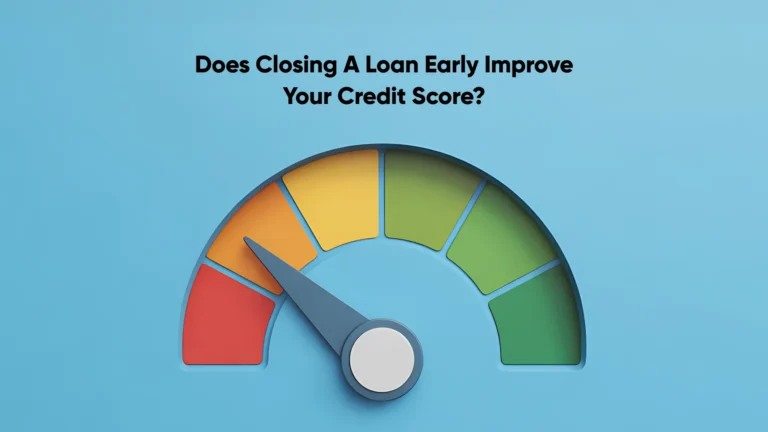
Closing a loan early does not immediately boost your credit score. It may react in different ways depending on what else is happening in your credit profile.
While it demonstrates financial responsibility, it reduces your credit mix and shortens your active credit history. Over time, though, early closure usually helps your overall credit health because your total debt comes down, and you save interest.
Short-term impact on credit score
In the short term, your score may stay the same, rise or dip slightly. This happens because your active accounts change, and sometimes your credit mix also changes.
For instance, you close your instant personal loan, and now you only have a credit card. Your mix reduces, so your score may not jump immediately. It may settle over the next few weeks once your updated report reflects the closure. So, if you check your score immediately after closure, don’t panic if it doesn’t rise. You are seeing the system adjusting your profile.
Long-term impact on credit health
In the long run, foreclosure of personal loan, only helps if it supports better habits: fewer obligations, lower stress, and consistent payments on other credit.
For instance, after closing your loan early, you stop juggling multiple due dates, and you never miss a credit card bill again. That consistency over months is what improves your credit score.
Situations Where Early Loan Closure Can Help
Early closure helps in cases where there is expensive debt or pressure on your monthly budget.
High-interest loans
If you hold a high-interest personal loan, early closure can save you a sizeable amount of interest. It also frees up your monthly EMI space, which can improve how lenders view your creditworthiness in the future.
Lower existing obligations usually make loan approvals easier. This is especially useful when you want to plan your next big goal, like a home loan.
Too many active loans
If you juggle multiple loans (small-ticket loans, short-term app loans, consumer durable EMIs), your monthly commitments start eating into your salary day after day. Even if you pay on time, lenders may see a crowded repayment schedule.
Closing these loans early can simplify your life and reduce your chance of missing an EMI due to timing issues.
Improving overall debt profile
When you reduce your total outstanding and monthly obligations, you improve your debt profile. Lenders care about this because they want to see that you can handle new credit responsibly.
Situations Where Early Loan Closure May Not Help
Foreclosure of loan may not be the right solution in some situations, as it may not add value and can even cause a small short-term dip in credit score.
Very short credit history
If you just started using credit recently, closing your loan early can leave your profile “thin”. With fewer active accounts, the score has less data to judge you. In such cases, focus more on building responsible credit history rather than foreclosure.
Closing your only active loan
If this is your only loan and you close it, you may end up with no active credit (or only one credit card). That does not mean you did something wrong, but your score may not rise immediately because your profile becomes less active.
Impact on credit mix
Credit mix means a variety of credit types, like loans and credit cards. If you close your only instalment loan, your mix can become less balanced. This may reduce the chance of a quick score increase.
What Happens to Your Credit Report After Loan Closure
Once a loan is fully repaid, it is marked as “closed” on your credit report with a zero outstanding balance. The entry remains on your credit report for around seven years as part of your credit history. However, since the loan is closed, it will no longer add new repayment activity that contributes to your credit score.
Status update on credit bureaus
After you close the loan, your lender reports the updated status to credit bureaus. Your report should eventually show the account as Closed with zero outstanding.
Do not ignore the wording. “Closed” is what you want. “Settled” signals you did not repay the full amount as agreed, and it can hurt your score and future approvals.
Timeline for score changes
Credit institutions typically submit updates in cycles, often taking around 30 to 45 days to reflect closures or pay-offs.
If your report still shows the loan as active after that window, raise it with your lender and then file a dispute with the bureau if needed.
Things to Check Before Closing a Loan Early
While many lenders allow early loan closure, some levy foreclosure charges on personal loans. Before closing a loan, check the lender terms and charges, if any.
Repayment or foreclosure charges
Some lenders apply:
- a lock-in period (you can’t close before a certain time), or
- a foreclosure/prepayment fee.
Always compare the ‘interest you save’ versus the ‘charges you pay’. If the savings are small, but the fee is high, you may prefer partial prepayment instead.
Outstanding dues and penalties
Before you request closure, check for any pending late fees, bounce charges, or unpaid interest from the last cycle.
If you close a loan with small dues left behind, the account may not get marked properly, and it can create issue for you later.
Loan closure confirmation: After closure, collect:
- NOC / No Dues certificate
- closure letter or account closure statement
- confirmation that auto-debit (NACH) is cancelled, if applicable
These documents help if your credit report shows an error later.
Smarter Alternatives to Improve Your Credit Score
While a pre-payment and foreclosure help you save on interest in some cases, there are other ways to improve and maintain a strong credit score with good financial habits.
Paying EMIs on time consistently
The single most important habit that builds a good score is making on-time payments. To ensure you never miss any due date, set auto-debit, keep a buffer, and avoid last-day payments that can fail due to bank downtime.
Reducing overall debt gradually
If full closure wipes out your emergency fund, don’t do it just for a score. Build down your debt steadily with partial prepayments and disciplined monthly planning.
Avoiding frequent loan applications
Every loan application can create an enquiry on your report. Too many enquiries in a short time can hurt your score and also makes lenders wary. Apply only when you truly need it and only to your most preferred lender at a time.
Frequently Asked Questions (FAQs)
What happens if I close my loan early?
If you close your loan early, you end up saving the interest you would have paid on future EMIs. But some lenders may charge a prepayment fee or apply a lock-in period. So, check the loan terms.
Is loan foreclosure good or bad?
Usually, loan foreclosure is good for your finances as you save future interest, but it can be neutral or slightly negative for your score if it reduces your credit mix or account age. Always check your lender’s foreclosure charges before deciding.
Does closing a loan early immediately increase credit score?
No, closing the loan early does not immediately increase credit score. Although, there can be a temporary dip in your credit score, as a closed loan may reduce your credit mix or shorten the average credit age. Long term, being debt-free and on-time payment history usually helps more.
Is loan foreclosure better than regular EMI payments?
If you have surplus funds, loan foreclosure can be better because it cuts interest cost and reduces debt. But if you’re comfortable with EMIs, continuing can help maintain credit mix and cash buffer.
Can closing a personal loan reduce my credit score?
Yes, closing a personal loan does temporarily cause a dip in your credit score. Typically, clearing a loan with on-time payments, is good for your financial health.
How long does it take for credit score to reflect loan closure?
Typically 30 to 45 days, depending on when your lender reports the update to credit bureaus. Newer regulatory changes are moving toward more frequent reporting cycles, which may help updates reflect faster in the future.
Should I close all loans to improve my credit score?
Not necessarily. A healthy score comes from on-time payments, low outstanding, and a balanced credit mix, so closing everything can sometimes remove “good” active history. Try to close high-cost debt first and keep only what you can manage comfortably.