A 750 credit score is generally considered strong. It can improve your chances of getting a personal loan and may help you qualify for better terms, but it does not guarantee approval, a particular interest rate or a specific loan amount.
This guide explains what a 750 score tells a lender, how it can affect the cost of a personal loan, and what lenders check beyond the score before making an offer.
Key takeaways
- A 750 credit score is generally considered strong and can improve your chances of getting favourable loan terms.
- Lenders also check your income, existing EMIs, employment and overall credit report.
- Credit scores can differ across bureaus, so the report behind the score also matters.
Is 750 a Good Credit Score?
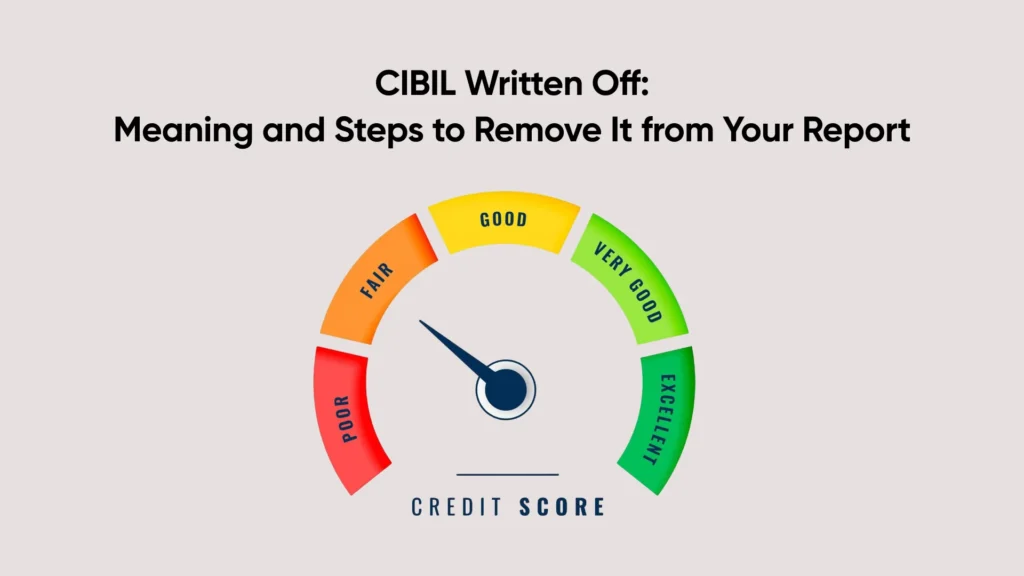
A 750 credit score is generally considered strong. Credit scores in India typically range from 300 to 900, and a higher score usually indicates lower credit risk. However, there is no single RBI-defined score band that all lenders follow, so each lender may interpret a 750 slightly differently.
| Score band | How lenders usually read it |
|---|---|
| 750 to 900 | Low risk. Most likely to be approved and offered a rate near the lower end of a lender’s range |
| 700 to 749 | Good. Approval is likely, though the rate may be a step higher |
| 650 to 699 | Fair. Some lenders may approve, often at a higher rate or for a smaller amount |
| Below 650 | Higher risk. Many lenders decline or ask for more checks |
These ranges are only a general guide, and each lender applies its own credit policy.
A 750-credit score is therefore a useful benchmark, but the number alone does not determine whether a loan will be approved. Lenders also consider the details in your credit report, your income and your existing repayment obligations.
If you are a step below, our posts on a 650 credit score and on how to reach a 700 score show what changes at each level. For the full range and what each factor does, see what counts as a good CIBIL score.
What a 750 Score Tells a Lender
A credit score is a summary of your credit history, not the entire report. Along with a 750 score, lenders may look at:
- whether EMIs and card bills have been paid on time
- how much of your available credit you use
- recent loan or credit-card applications
- the age and mix of your credit accounts
- whether any accounts are overdue, settled or written off
Two people with the same 750 score can still have different credit histories. One may have several years of consistent repayments, while another may have a shorter credit history. That is why lenders review the credit report as well as the score.
Our guide on how to read your CIBIL report shows where each of these sits.
What a 750 Can Change on a Personal Loan Offer
A 750 credit score can strengthen your personal loan application because it signals a relatively strong repayment history. Depending on the lender and the rest of your profile, it may help you qualify for a better interest rate, a smoother application or more favourable loan terms. The impact can be seen in your offered interest rate. Even a few percentage points can change your EMI and the total interest you pay, as the example below shows.
To see what that gap is worth, take a ₹2 lakh personal loan repaid over 24 months. The rates below are points inside Zype’s range of 18% to 34% a year. All four are on a reducing balance, so interest is charged only on the amount you still owe.
| Interest rate (reducing balance) | Monthly EMI | Total interest over 24 months | Total repaid |
|---|---|---|---|
| 18% a year | ₹9,985 | ₹39,636 | ₹2,39,636 |
| 22% a year | ₹10,376 | ₹49,015 | ₹2,49,015 |
| 26% a year | ₹10,775 | ₹58,598 | ₹2,58,598 |
| 30% a year | ₹11,183 | ₹68,382 | ₹2,68,382 |
In this example, the difference between 18% and 30% is about ₹1,200 in EMI each month and ₹28,700 in total interest over 24 months. This shows how much the interest rate can change the cost of the same loan. When you compare offers, look at the total cost, including the processing fee, shown in each lender’s Key Facts Statement (KFS) rather than on the headline rate alone.
For the full list of charges, see our page on personal loan interest rates.
Can You Get a Personal Loan with a 750 CIBIL Score? What the Score Does Not Decide
A 750 score can strengthen your application, but lenders do not approve loans based on the score alone. They may also consider:
- Income and stability: Your salary and employment history help the lender assess whether the EMI is manageable.
- Existing EMIs: Lenders check how much of your income is already committed to loan repayments.
- Credit-report details: Recent missed payments, several unsecured loans or multiple recent applications still matter even when your score is strong.
- Eligibility and documents: Your age, employment, KYC details and application information must meet the lender’s criteria.
So, a 750 score with a high FOIR (Fixed Obligation to Income Ratio) can still get a smaller loan amount, while a 720 score with no other EMIs may be offered a higher amount. Our guide on how FOIR is worked out explains the calculation. On Zype, you can apply if you are salaried, aged 18 to 58, with a salary of ₹15,000 or more credited to your bank account. Loans run from ₹3,000 to ₹5 lakh over 6 to 36 months, at 18% to 34% a year, and are disbursed via RBI-registered NBFCs.
You can check the full personal loan eligibility criteria before you apply.
A 750 CIBIL Score vs 750 on Experian, Equifax or CRIF
India has four RBI-registered credit bureaus: TransUnion CIBIL, Experian, Equifax and CRIF High Mark. Each bureau maintains its own credit information and uses its own scoring model, so your scores do not have to be identical across all four. Our comparison of CIBIL vs Experian explains why.
What matters is the credit report your lender checks. Under RBI’s 2025 rules for credit bureaus, you can get one free full credit report, including your score, from each credit bureau once every calendar year. Checking your own credit report does not lower your credit score. You can also check your CIBIL score online on Zype.
How to Use a 750 Score When You Apply
A good score gives you choice, and a few habits help you make the most of it:
- Fix errors first. If an account is wrong or a closed loan still shows as open, correct the error in your report before you apply.
- Avoid multiple applications at once. Each credit application can create a hard enquiry, and several recent enquiries may affect your credit profile.
- Borrow only what you need. A smaller loan can reduce the total interest you pay. Choose a repayment tenure that keeps the EMI manageable without stretching the loan unnecessarily.
- Compare the Key Facts Statement. Look at the APR, processing fee, EMI and total repayment, not just the headline interest rate.
Keeping a 750 score, and Moving from 750 to 800
Maintaining a 750 credit score and improving it to an 800 score depends on basic credit-building habits: paying EMIs on time, keeping credit use low and avoiding unnecessary credit applications.
There is no fixed timeline for moving from 750 to 800 because credit scores depend on your overall credit history. Consistent repayment behaviour matters more.
If you want to improve your score further, see our guide on how to move from 750 to 800. If your score is lower, our broader guide explains how to improve your CIBIL score.
Frequently Asked Questions
Is 750 a good CIBIL score?
Yes. A 750 CIBIL score is at the start of the top band on the 300 to 900 scale, which most lenders treat as a good score. It usually improves your chance of approval and the rate you are offered, though the final decision also depends on your income and existing EMIs.
Can my loan be rejected even with a 750 score?
Yes. A 750 score does not guarantee automatic approval. Lenders may also consider your income, existing EMIs, employment, recent credit activity and whether you meet their eligibility requirements.
How much loan does a 750 CIBIL score get me?
There is no fixed loan amount linked to a 750 CIBIL score. The amount offered depends on factors such as your income, existing EMIs, repayment capacity and overall credit profile. On Zype, the final amount offered depends on your eligibility and overall profile.
Does a 750 get the lowest interest rate?
Not necessarily. A strong credit score may help you qualify for better pricing, but lenders consider your overall credit profile when setting the rate. Compare the APR and total repayment in the Key Facts Statement before choosing an offer.
How long does it take to go from 750 to 800?
There is no fixed time, because it depends on what is holding the score at 750. Paying every bill on time, keeping card use low and avoiding new applications usually lifts a score gradually over several months, but no one can promise a specific number by a specific date.
Does checking my own score lower it?
No. Checking your own credit score does not lower it. A lender’s hard enquiry after you apply for credit may affect your score, especially if several applications are made within a short period.