Table of Contents
ToggleOverview
A personal loan can take care of your financial needs when you are short on funds or need to make an expensive purchase. However, as a borrower, it is important to understand your repayment capacity before taking up any loan. Any borrower who is unable to repay the loan amount on time or to its full capacity usually must settle the loan with the lender. This is known as personal loan settlement.
This blog explores personal loan settlement, weighs its pros & cons and the impact on credit score.
What is Personal Loan Settlement?
The loan settlement means an agreement where the lender accepts a lower amount than the total outstanding dues because the borrower is unable to repay the full loan amount. This usually happens when the borrower is unable to repay the loan due to circumstances such as job loss, illness or any other financial constraint. While a loan settlement helps you clear off your loan, it comes with a significant negative long-term impact on your credit score.
How Does Personal Loan Settlement Work?
If a borrower is unable to repay the loan for an extended period, then the lender may offer the option to settle the loan. Considering the situation of the borrower, they may settle on a lesser amount to close the loan. The amount is decided by the lender factoring in the repayment capacity and borrower’s current situation. This provides the borrower with the opportunity to pay off the loan. However, the borrower will have a “settled” status on their credit report.
Advantages and Disadvantages of Loan Settlement
To understand if loan settlement is the right choice for you, it is important to weigh the pros and cons of it:
Advantages of Loan Settlement
- Debt Reduction: Loan settlement is a good solution if the borrower is unable to repay the loan during the loan tenure.
- Financial Relief: Loan settlement gives you the option to settle the loan with a one-time payment, making you debt-free.
- Protects from Legal Consequences: Defaulting on loan instalments can lead to serious consequences like asset confiscation or legal action (in extreme cases). Loan settlement offers you the option to clear off your loan.
Disadvantages of Loan Settlement
- Impact on Credit Score: Loan settlement is shown as “settled” in the credit history. This impacts the credit score, and the lender views the individual as a high-risk borrower.
- Difficulty Getting New Credit: If any individual has a “settled” status in their credit history, the lender may reject loan applications or offer credit at a high interest rate. This status stays on the credit report up to seven years and decreases the credit score.
- No Guarantee of Lender: There is no guarantee if the lender will agree to settle the loan. They may prefer the borrower to repay the loan entirely or take legal action.
What is the Difference Between Closing a Loan and Settling a Loan?
The main difference between closing a loan and settling a loan is the repayment amount and how it appears in your credit report.
Loan closure means you repay the full outstanding amount, including principal, interest, and charges. It is usually marked as “Closed” in your credit report and supports a healthy credit profile. Loan settlement means the lender accepts a lower amount because you cannot repay the full dues. It may be marked as “Settled” and can negatively affect your credit score and future loan eligibility.
| Feature | Loan Closure | Loan Settlement |
|---|---|---|
| Definition | It is the full repayment of the loan amount, including interest. | It is a settlement of the loan at an agreed upon amount (less than outstanding loan). |
| Repayment Amount | You repay the full outstanding dues, including principal, interest, and applicable charges. | You repay only a part of the outstanding amount. The lender may waive or write off the remaining dues. |
| Credit Report Status | The loan is usually marked as “Closed” after full repayment. | The loan may be marked as “Settled” or “Written-Off”, depending on the lender’s reporting. |
| Credit Score Impact | It can support a healthy credit profile because it shows that you repaid the loan as agreed. | It can negatively affect your credit score because it shows that the full loan amount was not repaid. |
| Future Borrowing | It can improve your chances of getting future loans or credit cards, subject to lender checks. | It may make future loan approvals harder or lead to higher interest rates. |
| Official Documentation | The lender usually issues a No Objection Certificate (NOC), loan closure letter, or closure certificate. | The borrower should get a written settlement agreement that clearly mentions the agreed amount, payment deadline, and final status after payment. |
| Best Suited For | Borrowers who can repay the complete loan amount and want a clean credit record. | Borrowers facing serious financial difficulty and unable to repay the full outstanding amount. |
| What to Check Before Proceeding | Confirm that all dues are cleared and collect the NOC or closure proof from the lender. | Understand the credit score impact, get written confirmation, and check how the loan will be reported to credit bureaus. |
How Does Loan Settlement Impact Your Credit Score?
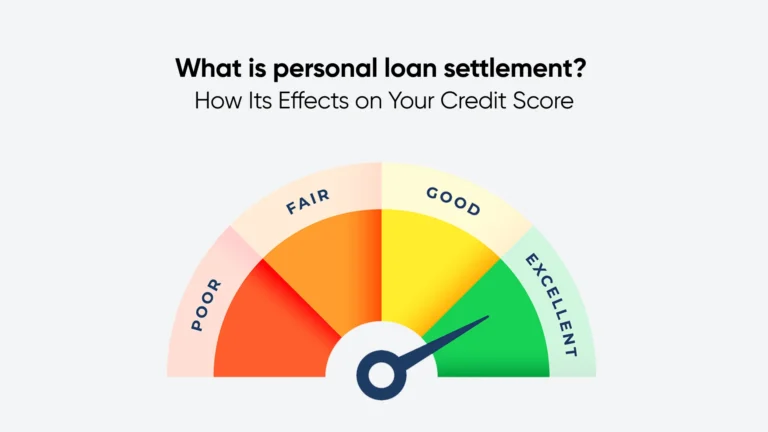
Loan settlement negatively impacts your credit score. While it does provide short-term financial relief to the borrower, it has a significant long-term impact.
- When you settle a loan with a lender, this entry is shown as “settled” in your credit history.
- The “settled” entry stays on your credit report for seven years.
- Additionally, any future lender that checks your credit report will view you as a high-risk borrower and may reject your loan application.
- If a lender does approve your loan application, it will be on strict terms and a high interest rate.
Key Considerations Before Opting for Loan Settlement
- Explore Alternatives: Before you opt for a personal loan settlement, explore other options like debt consolidation, negotiating for a lower interest rate, or seeking credit counseling. These alternatives have less severe impacts on your credit report than loan settlement.
- Factor in Long-Term Impact: You need to understand that loan settlement impacts your CIBIL score for several years. The loan “settled” entry stays on your credit report for seven years. It affects loan applications, and you may find it tough to get new credit.
- Seek Help: Consider the help of a financial advisor. They can provide guidance and assist with the loan settlement process.
- Legal Impact: Some lenders may not agree to settle the loan. In a few instances, lenders may take legal action to recover the debt.
Steps to Settle a Personal Loan with Your Lender
- Review Your Finances: Take a good look at your current financial situation. Assess your income sources, expenses, assets, and liabilities to determine what you can realistically offer as a settlement.
- Contact Your Lender: Reach out to your lender to settle the loan. Explain to the lender your current financial conditions (like job loss, and illness) and provide them with proof of it.
- Negotiate: Negotiate with the lender for the settlement amount. Depending on your current financial condition and repayment capacity, the lender may settle for a specific amount (less than the outstanding).
- Get It in Writing: Ask the lender for a loan settlement letter or written agreement that clearly mentions the agreed settlement amount, payment deadline, final loan status, and how it will be reported to credit bureaus.
- Make the Payment: Pay the agreed upon settlement amount to the lender within time. Get the receipt for the loan settlement.
Tips to Improve Credit Score After Loan Settlement
It is possible to improve your credit score after loan settlement. Here are a few points to improve credit score:
- Change the “settled” status: To improve your credit score, you need to change the “settled” status to “closed” one. To do this, clear off the loan by paying the entire amount of the outstanding loan and ask your lender for a NOC on the loan. Check with the bureau to update this change.
- Build a good credit history: You need to make timely credit payments to build a good credit history to improve your credit score.
- Clear existing debts: Pay off any other existing loan or credit on time and in full. Repayment history affects one-third of your credit score and paying off debts will significantly improve your credit score.
- Keep credit utilization below 30%: If you have a credit card with a limit of ₹50,000 try to utilize the credit till ₹15,000 (30% of credit limit). Utilizing more than this implies to lenders that you are dependent on credit cards, which also impacts your credit score.
- Avoid applying for new loan: After loan settlement, it is advisable to wait a few months to build a strong credit score before applying for a new loan. This patience can improve your chances of approval and help you secure better terms.
Conclusion
Building a good credit score after loan settlement requires responsible financial choices. You need to put consistent efforts into building a good credit history. Ensure that you make timely credit payments and clear all existing debt. Try to repay the “settled” loan in full and change the status to “closed” by getting a No Objection Certificate (NOC) from the lender. This will ensure you get loan or credit approval in the future without any issues.
Frequently Asked Questions
What Is Personal Loan Settlement?
Personal loan settlement is the agreement between a lender and borrower to repay the outstanding loan amount.
How does loan settlement impact my credit score?
Yes, loan settlement does impact your credit score, as it indicated you were unable to repay the full loan amount and lowers your creditworthiness.
Can I improve my credit score after loan settlement?
Yes, you can improve your credit score after loan settlement; however, it may take few weeks to months to build a good credit score. You can do this by clearing any existing debts, low credit utilization ratio and a good repayment history.
What are the alternatives to loan settlement?
Before loan settlement, you can explore other alternatives like debt consolidation or negotiate with the lender for a lower interest rate. This will have a lesser impact on your credit score as well.
Is loan settlement a good option?
Loan settlement may not be a good option for the long term as it affects your credit score. Additionally, future lenders may view you as a high-risk borrower and may reject loan applications in a few instances.
Can I remove a settlement from CIBIL credit report?
Yes, you can remove settlement from CIBIL credit report by paying the outstanding amount and getting a No Objection Certificate (NOC) from the lender to remove the “settled” status from your credit report.
Does your CIBIL credit score increase after closing a loan?
It depends on how the loan was closed. If the borrower repaid the outstanding amount, then it has a positive impact on the CIBIL score, however, if the loan was settled or written off, then it has a negative impact on the CIBIL score.
How long does a loan settlement stay in CIBIL credit report?
The loan settlement stays on your CIBIL credit report for up to seven years.