Table of Contents
ToggleKey Takeaways
- Using a personal loan for a one-time cash shortage can be manageable, but relying on it regularly may lead to debt.
- Personal loan interest rates in India vary based on the lender and your credit profile.
- Even a single EMI delayed by 30+ days can negatively affect your credit score.
- Maintaining an emergency fund of 3–6 months of expenses can help avoid borrowing for regular bills.
Introduction
Many of us have wondered: Is a personal loan good or bad for covering everyday bills? The honest answer is that it depends. Even an instant personal loan can help when you face a temporary cash gap. But if you rely on loans month after month, costs and credit risk can pile up quickly. Let’s break it down in simple terms.
What Does Taking a Loan for Monthly Expenses Mean?
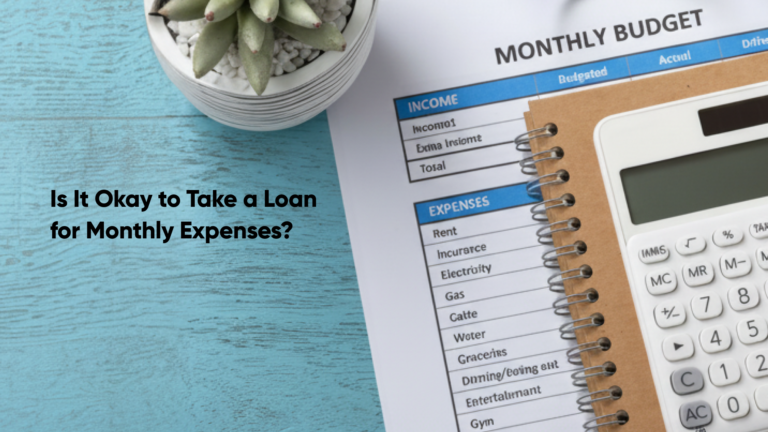
Taking a loan for monthly expenses means borrowing money to cover everyday costs such as rent, groceries, utility bills, or transportation when your income is insufficient for the month.
People often turn to short-term borrowing options when they need immediate funds to manage essential expenses.
What Does Taking a Loan for Monthly Expenses Mean?
Taking a loan for monthly expenses means using credit like a personal loan, salary advance, credit card EMI, or small‑ticket instant credit to pay routine bills, rent, groceries, utilities, commute, or school fees, rather than funding them from your monthly income and savings.
Common monthly expenses people borrow for
- House rent, maintenance, or utility bills
- Groceries and daily essentials
- School/tuition fees and transport
- Medical bills are not fully covered by insurance.
- EMIs on other loans (a warning sign if this happens often)
Short-term gaps vs long-term dependence
- Short-term gap: A one‑off cash crunch (e.g., delayed salary) where you borrow a small amount and repay in full on time.
- Long-term dependence: Using loans every month to run the household. This often raises FOIR and risks missed EMIs, fees, and score damage over time.
Why Do People Consider Loans for Monthly Expenses?
People usually borrow for monthly expenses when they face financial pressure or unexpected situations like:
Sudden expenses or emergencies
Unexpected medical costs, repairs, or travel can derail a tight budget. That’s why experts recommend an emergency fund, typically 3–6 months of essential expenses, so you don’t need to borrow for routine needs.
Irregular income or delayed salary
Freelancers, gig workers, and people with commission‑based pay may face uneven cash flows. A small, instant personal loan can bridge the timing gap, but only if EMIs fit comfortably within next month’s budget. Interest rates vary widely across lenders and profiles.
Lack of emergency savings
When savings are thin, borrowing feels like the only option. But repeated borrowing raises costs and risk. Building even a basic buffer over time reduces dependence on credit.
Is It a Good Idea to Take a Loan for Monthly Expenses?
Whether borrowing for monthly expenses is a good decision depends on the situation and repayment capacity. Many people wonder whether a personal loan is good or bad for this purpose. The answer is not the same for everyone.
Situations where it may make sense
- One‑time shortfall with a clear plan to repay (e.g., salary delayed by a week or two).
- Medical or essential expenses where delaying payment is riskier than the loan cost.
- Small-ticket needs: for example, a ₹1,000 instant loan or ₹5,000 emergency loan, fees are transparent, interest is reasonable, and you can repay on schedule. RBI’s digital lending framework requires clear disclosures and safer practices from regulated lenders.
Quick tip: Always check the effective annual cost, not just “per month” rates or marketing claims, and prefer lenders following RBI’s Digital Lending Directions.
Situations where it can create problems
- Borrowing every month to meet regular bills is a red flag for a debt spiral.
- High interest and fees: Indian personal loans can run from approximately 9.5% to 24% p.a. or more, especially with NBFCs for thin‑file borrowers; frequent borrowing adds up.
- Tight FOIR: If EMIs push your FOIR beyond ~40–50%, approval chances drop, and stress rises.
If you’re weighing whether a personal loan is good or bad for you, ask: Will this be one‑time and affordable, or recurring and stressful?
How It Can Affect Your Credit Score
Repayment behaviour and EMI history
Your repayment history is a major factor in your CIBIL score. One 30‑day+ delay can reduce your score and stay visible on your report for months; repeated delays hurt more.
Effect of missed or delayed EMIs
Missed EMIs can lead to penalty charges, higher future interest, and negative bureau reporting. Over time, this can make all borrowing more expensive.
Also note: Hard enquiries from multiple loan applications within a short period can shave points off your score; space out applications and apply only when eligible.
What to Consider Before Taking a Loan for Expenses
Before you take a loan to manage monthly expenses, it is important to evaluate a few practical factors. Careful planning can help you avoid unnecessary financial pressure and ensure that borrowing remains manageable.
Ability to repay comfortably
Keep total EMIs within a sensible FOIR (many lenders prefer ~40–50%). If adding a new EMI makes money too tight, rethink the loan amount or tenure.
If you only need a small amount to manage a short-term expense, you can use Zype to apply for smaller loan amounts, such as a ₹3,000 instant loan or ₹5,000 emergency loan, instead of committing to a large borrowing amount.
Total cost of the loan
Look beyond interest: add processing fees + GST (18%) on those fees, plus any insurance, late charges, or prepayment penalties. GST does not apply to the principal or interest, but it does apply to most loan‑related fees.
Impact on future financial goals
Late payments today can mean higher rates and tougher approvals tomorrow. Even one missed EMI can raise your future loan cost; this is why, whether a personal loan is good or bad, it depends heavily on timely repayment.
Conclusion
So, is a personal loan good or bad for monthly expenses? It can be useful for a one‑off gap, provided you understand the costs, read the fine print, and repay on time. But if you need credit every month to run your home, it’s a signal to reset the budget, build an emergency fund, and reduce fixed outgo. When in doubt, borrow small, compare offers, and choose regulated lenders with transparent terms.
Frequently Asked Questions (FAQs)
Is it okay to take a loan for monthly household expenses?
Occasionally, yes. If it’s a short‑term cash gap and the EMI fits your budget. Avoid recurring borrowing for routine bills; costs and credit risk rise quickly given typical personal‑loan interest rates in India.
Will taking a loan for expenses affect my credit score?
Not by itself. How you repay affects your score. On‑time EMIs help; 30‑day+ delays hurt and can raise your future borrowing cost. Multiple hard enquiries in a short span can also trim points.
How often should someone borrow for regular expenses?
Ideally, not at all. Use loans for one‑off gaps, not monthly needs. If you often need an instant loan or emergency loan, review your budget and start building a small emergency buffer.
Are loans meant for emergencies or daily needs?
Unsecured credit, like a personal loan, is best for emergencies or planned one‑time expenses, not daily needs. Frequent use can increase FOIR and interest costs.
What should I do if I depend on loans every month?
- Pause new borrowing and list all expenses and EMIs.
- Aim to bring FOIR down (prepay small loans if possible).
- Build a 3–6 month emergency fund over time.
- If you still need credit, compare regulated instant personal loan options carefully and borrow the smallest amount you can repay on time.